AMPAURA AUSTRALIA
Case studies

Commercial battery case studies from live Australian sites

RCT Power battery energy storage systems have been deployed around the globe. In Australia they total more than 2.4 GWh of storage connected to Australian grids. Where AI Mode has been deployed, results are measured against a documented baseline before and after.

46%
the real-world high: AI Mode savings on a live cold storage site, against its documented baseline
20%+
at least what AI Mode adds on top of a standard operating strategy
Baseline
documented before AI Mode starts, so the difference is measured, not estimated
Featured

Cold storage, Queensland: 46% lower grid cost with AI Mode

A refrigerated warehouse in Queensland running a 30 kW / 63 kWh battery behind 40 kWp of solar. Over seven completed operating days, 15 to 21 July 2026, the platform recorded $151.24 in cost savings. Modelled against self-consumption only across the same days, on the same load and the same tariff, AI Mode brought estimated grid electricity cost down from $88.51 to $47.56. That is 46% lower, and it was done without letting refrigeration wander. Every site is modelled individually before we give an estimated additional saving from AI Mode.

Live Australian site: 30 kW / 63 kWh battery, 40 kWp solar
Seven completed operating days, 15 to 21 July 2026
Comparison holds load, tariff and a 10% minimum state of charge constant
$151.24platform-recorded cost savings across the seven days
+$40.94of that attributable to AI timing, against self-consumption only
46%lower estimated grid electricity cost: $47.56 with AI, $88.51 without
Day by day: AI saving against self-consumption only
15 Jul
+$7.76
16 Jul
+$5.66
17 Jul
+$8.99
18 Jul
Saturday: no extra grid charging needed
$0.00
19 Jul
Sunday: self-consumption was already enough
$0.00
20 Jul
+$9.34
21 Jul
+$9.19
Five weekdays: $40.94 total, averaging about $8.19 a working dayWeekend: $0 incremental
Charge while it is cheap

AI used the 11:00 to 13:00 low-price window to build enough state of charge for the evening. Across five weekdays it accepted about $15.47 of cheaper energy to do it.

Spend it on the peak

That energy was held for the 17:00 to 20:00 peak. Peak imports fell to zero on 17 and 21 July, and from 31.3 kWh to 1.06 kWh on 20 July.

Know when to do nothing

On the weekend the load did not warrant it, so AI stayed with self-consumption. Nothing claimed, and nothing wasted on a charging cycle the site did not need.

Cross-check on a comparable solar day

2 July, before AI Mode, ran on 39% solar and returned $13.75 in savings with the battery contributing 5%. On 15 July, with AI Mode and a similar 36% solar share, the same site returned $26.73 with the battery contributing 20%. This is not the baseline, but it points the same way: what changed was the timing, not the weather.

Basis: seven completed operating days, 15 to 21 July 2026, on a 30 kW / 63 kWh battery with 40 kWp of solar. Platform-recorded savings and the modelled comparison cover the same days. The comparison holds load and tariff constant, keeps a 10% minimum state of charge, and allows no grid charging in the self-consumption baseline. Site named on request with the customer's agreement.

The hardware track record

Deployments by RCT Power, our hardware partner

The batteries we supply carry a global track record: 15+ GWh shipped across 27 countries and more than 100 documented cases. Some of it is close to home.

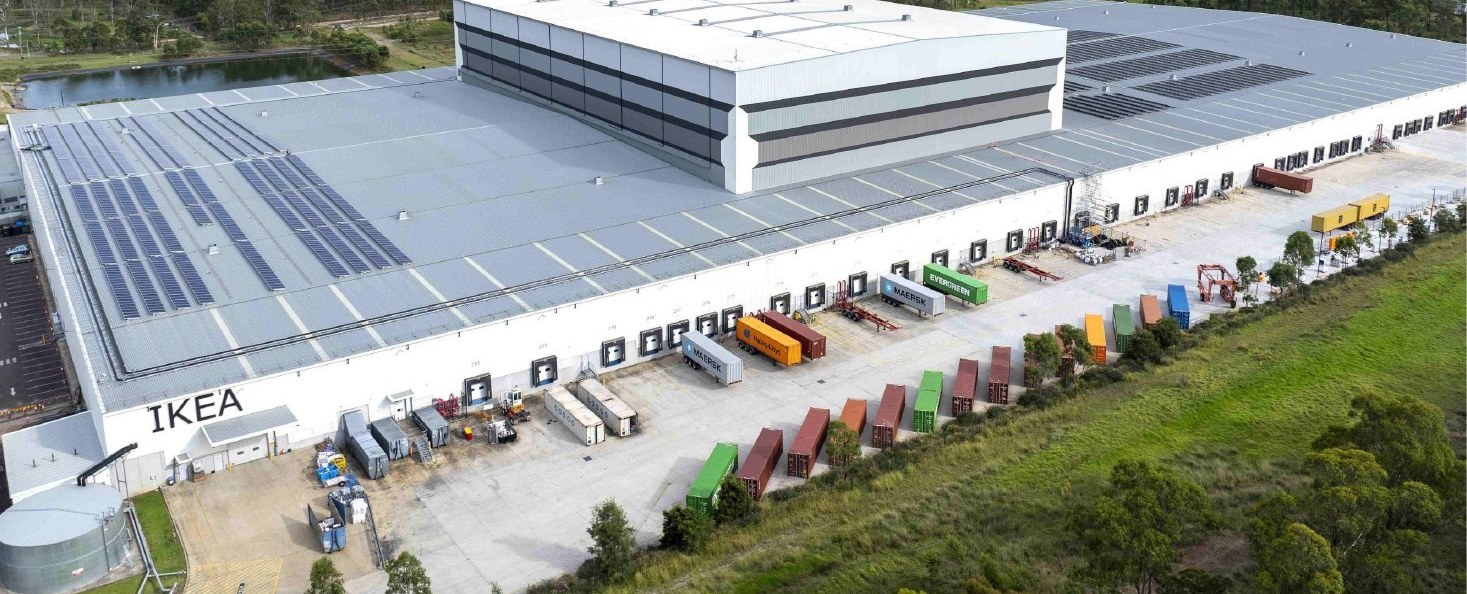
IKEA Sydney

1.17 MWh of storage behind one of Australia's most recognisable retail sites.

Torrens Island, SA

RCT Power technology inside grid-scale South Australian deployments headlined by the 1.2 GWh Torrens Island project. Delivered by others, not an Ampaura project, and listed here only to show the technology already running on the Australian grid.

New South Wales

920 MWh of RCT Power storage deployed across NSW projects.

More on RCT Power →
How results get published here

A result earns its place on this page when three things are true: the baseline was documented before the change, the saving is measured on meter data over a stated period, and the site has agreed to the publication. That standard means this page grows slower than a testimonial wall. It also means you can believe it.

Thirty-eight projects, five continents

Every marker is an RCT Power deployment, from a single cabinet on a Croatian factory to grid storage measured in gigawatt hours. A few carry published measured results. The rest are recognised installations on the same battery platform. Select a marker to see what is on site.

Drag the map sideways to see every location.

Measured case study on this pageRCT Power deployment

    Markers show the city, region, state or country named in each project record, not an exact street address, and several markers cover more than one project. Sizes, dates and results as reported by RCT Power and Ampaura Australia project documentation.

    Proof by industry

    One battery platform, proven in your industry

    Wherever your energy problem lives, this platform has already solved it somewhere. These are projects from the RCT Power global fleet: the same German-engineered battery platform we supply and support in Australia.

    Aerial view of the IKEA Marsden Park distribution centre in Sydney with rooftop solar and RCT battery storage

    Retail and distribution

    Sydney, Australia
    IKEA Marsden Park Distribution Centre
    951 kW rooftop solar + 1,165 kWh battery

    On-site energy lifted from 26% to 70%, saving about $265,000 a year. In IKEA's words: rooftop solar and storage took the site from a quarter self-powered to seventy percent.

    Manufacturing

    Frankfurt, Germany
    Suzuki factory
    1 MW / 1.86 MWh with solar and diesel backup

    Solar first, battery second, diesel demoted to standby. Stable supply for automotive production with sharply lower generator running costs.

    Wenzhou, China
    Vehicle industry plant
    1 MW / 1.86 MWh

    Two RCTerra 1000 units shaving peaks on a continuous production load in the vehicle industry.

    Suzhou, China
    Packaging manufacturer
    2.99 MW / 5.96 MWh

    Four RCTerra 1500 units cutting peak demand at a green packaging plant.

    Food and agriculture

    Queensland, Australia
    Cold storage and warehousing
    30 kW / 63 kWh battery + 40 kWp solar, AI Mode

    Seven completed operating days, 15 to 21 July 2026: AI Mode cut estimated grid electricity cost by 46% against self-consumption alone, from $88.51 to $47.56, while keeping refrigeration stable. Every number on our AI page comes from this site.

    Gorinchem, Netherlands
    Working farm
    500 kW / 1,165 kWh

    Solar and storage integration plus peak shaving on a modern farm, five RCTerra 200 cabinets, cutting both the electricity bill and the emissions that come with it.

    EV charging

    Jiangmen, China
    Super charging station
    500 kW / 932 kWh

    Battery buffering lets a charging hub serve fast chargers without a grid upgrade.

    Remote and microgrid

    Guereda, Chad
    Remote community microgrid
    1.25 MW / 4.1 MWh

    Storage-backed power where the grid does not reach, three RCTerra 1500 units in a smart microgrid.

    Iriba, Chad
    Remote community microgrid
    2.5 MW / 7.83 MWh

    Six RCTerra 1500 units running an isolated network.

    Utility scale

    Kent, England
    Grid storage
    50 MW / 50 MWh

    RCT Power grid-scale storage supporting the UK network.

    Texas, USA
    Grid storage
    100 MW / 100 MWh

    The same platform family at one hundred megawatt scale.

    Sizes and results as reported by RCT Power and Ampaura Australia project documentation. Ask us for the full case study on any of these.

    Your site could be the next one here

    Send twelve months of interval data and we will show you what AI Mode would have found in it, with the same baseline discipline these case studies are held to.